
Most of what you are being asked to decide right now can wait. A few things cannot, and two of them cost real money if they are handled wrong.
Arrives straight away. Nothing to pay, nothing to buy, and nothing on it needs a lawyer.
What to do when someone dies
Most of what you are being asked to decide right now can wait. A few things cannot, and two of them cost real money if they are handled wrong.
Arrives straight away. Nothing to pay, nothing to buy, and nothing on it needs a lawyer.
“If somebody is pressing you for a decision in the first forty-eight hours, that pressure is information about them, not about how urgent the decision is.”
Page three
Photograph by Marc Pell on Unsplash
Reproduced in full from page three
In the first two days you will be asked to decide things that do not have to be decided. Some of the people asking are being kind and some are selling. Either way, the answer is that it can wait.
Two of the six pages
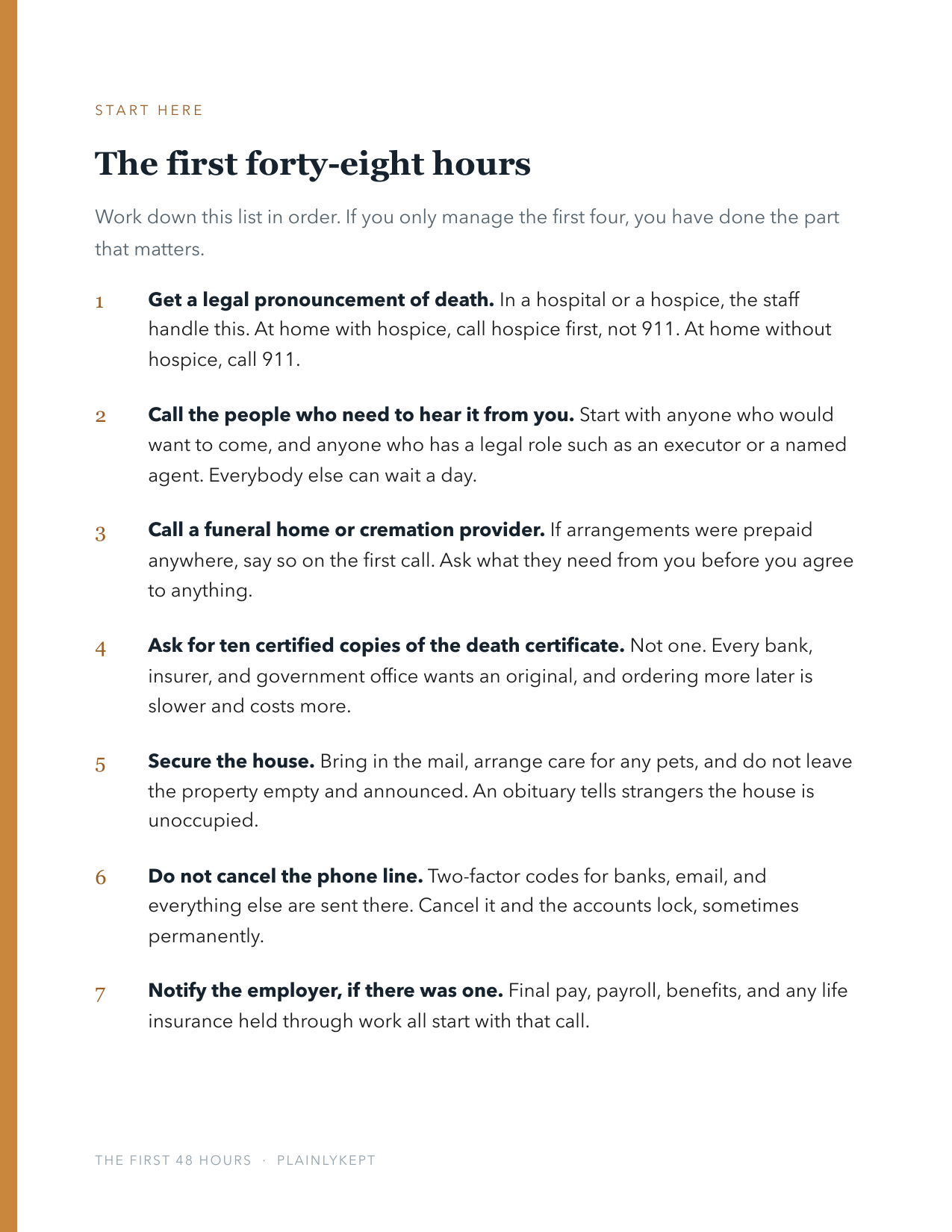
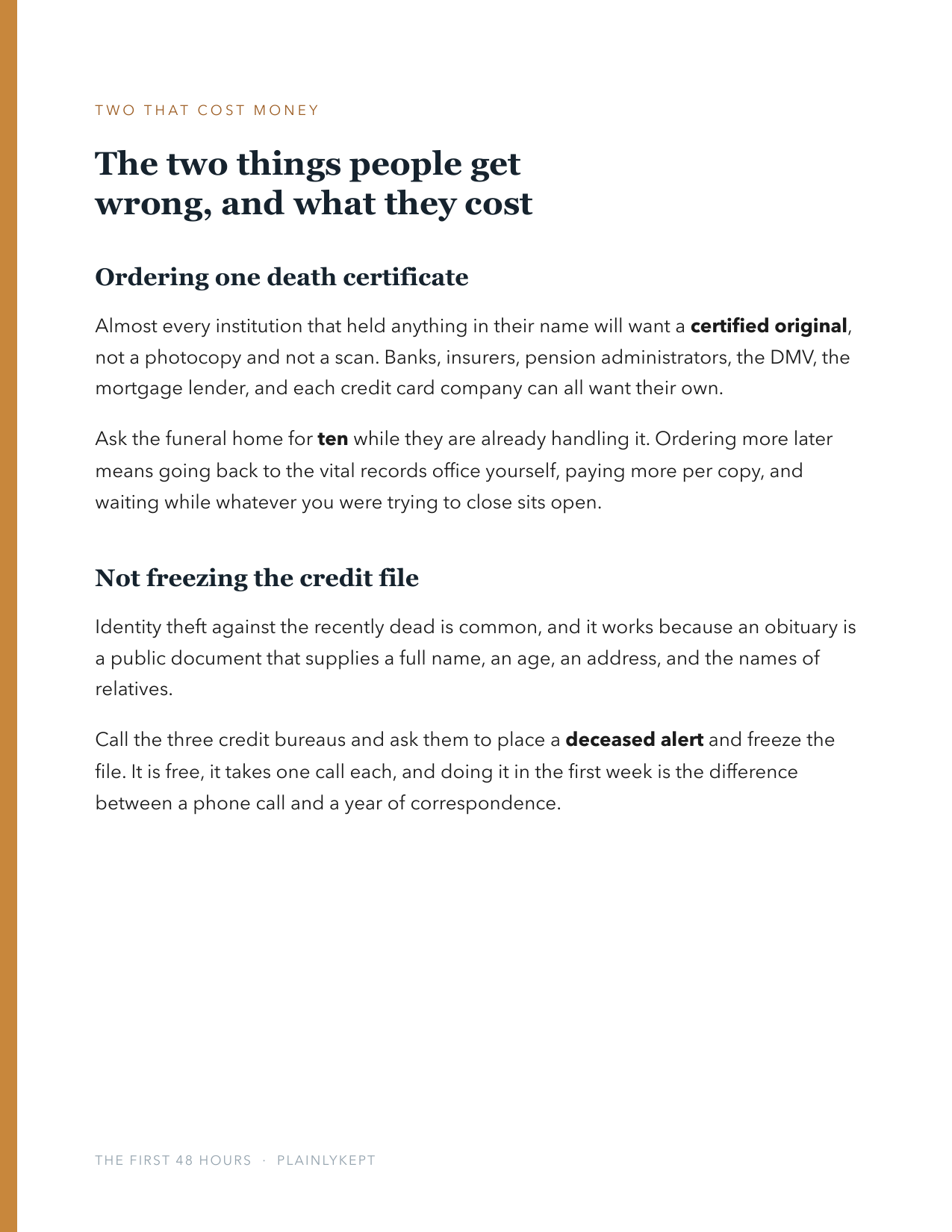
Nothing. There is no card, no trial, and no upsell on the download.
Send you the checklist, and occasionally something else useful about settling an estate. Unsubscribe on any of them and that is the end of it.
No. It is a list of practical steps, and the rules on some of them differ by state. Anything involving a will, a trust, or probate needs an attorney licensed where you live.
No. It reads on a phone, and it prints cleanly on US Letter if you would rather have it on paper, which many people would in that week.
Whoever is holding the phone. Usually a spouse or an adult child in the first day or two, before the funeral is arranged.
Six pages. It arrives straight away.
Nothing to pay, nothing to buy.